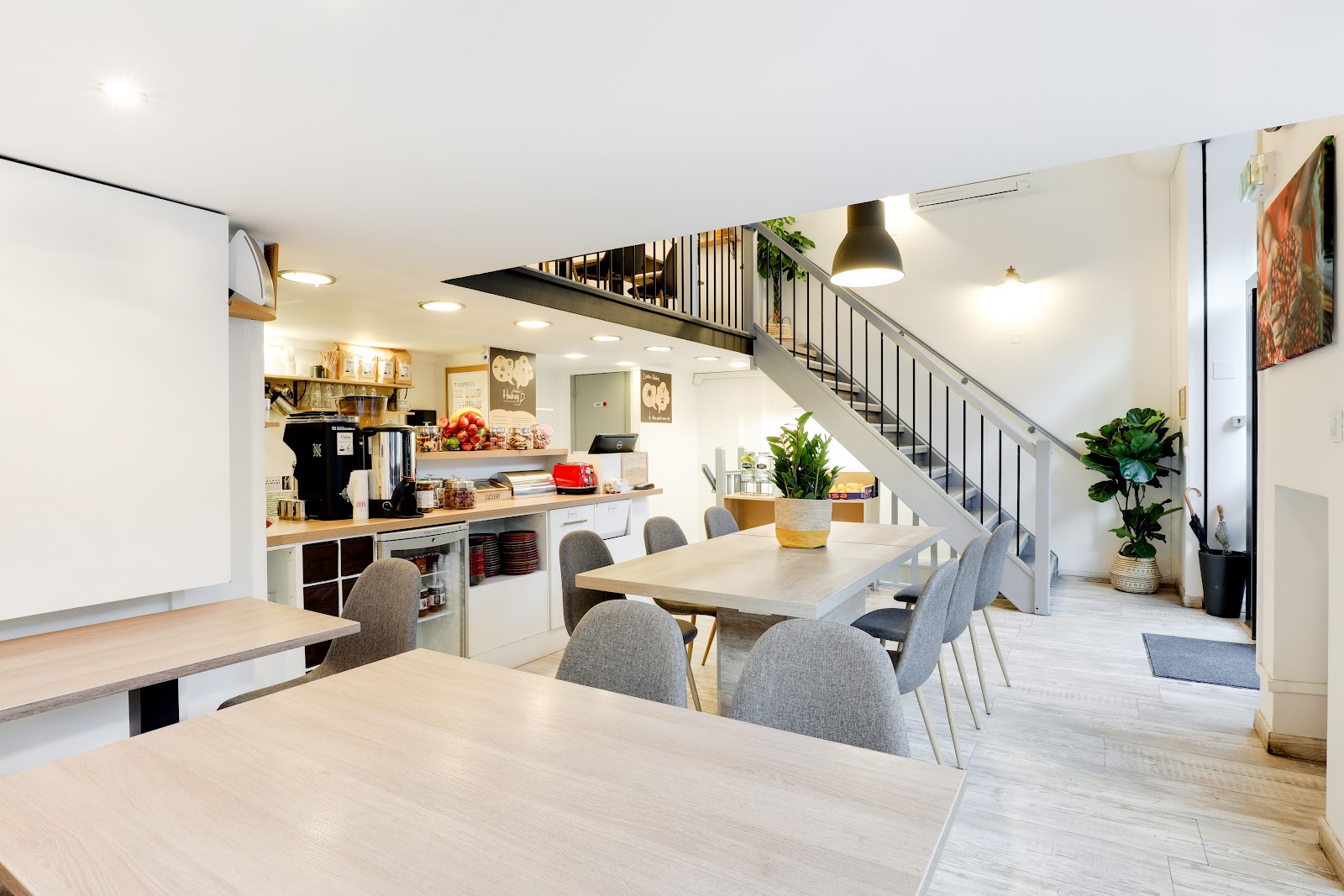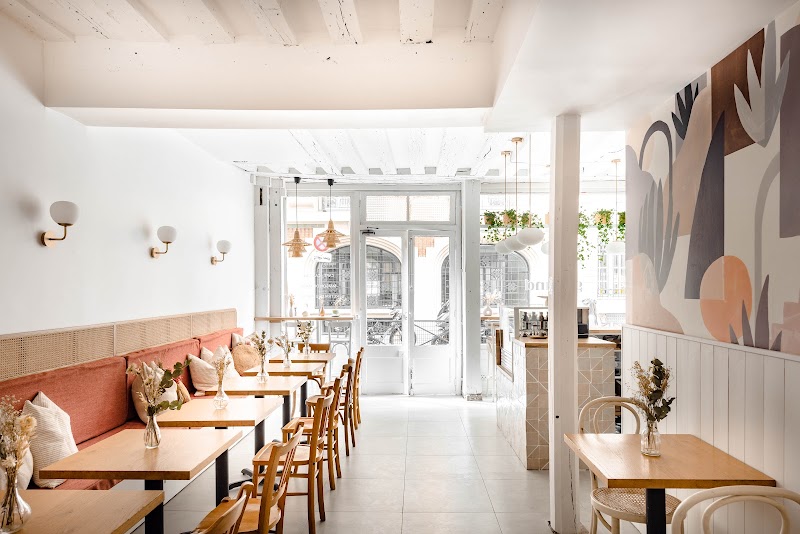
Good news: no, you don't have to order a coffee every half hour to justify your seat. But "not constantly" doesn't mean "nothing at all". There's an unspoken agreement between the remote worker and the café owner, a kind of tacit contract that everyone understands intuitively. Here's how to respect it without breaking the bank or coming across as a squatter.
The tacit contract: one order every 1.5–2 hours
The unwritten norm in most cafés is one order every 1.5 to 2 hours. It doesn't have to be a double espresso: a mineral water, a juice, a tea… everything counts. A coffee and a pastry when you arrive? You're good for a solid two hours. The idea isn't to drink when you're not thirsty, but to signal that you're a customer, not an occupant. If you're staying 4 hours, plan for 2 to 3 orders. It's reasonable, predictable, and keeps you on good terms with the staff.
During rush hours, the rules change
At lunchtime between 12 and 2 pm, or on a Saturday morning in a town-centre café, the logic is different. When every table is worth its weight in gold and customers are standing waiting, sitting for two hours with an empty coffee cup means making a decision on the owner's behalf. During those slots, either order more actively (a starter, a main, a dessert) or free up your table. It's common sense, not a rule. If you really want to work during those hours, opt for large chains or cafés with a space clearly set aside for nomadic workers.
The tip as a lever: it changes everything
A generous tip when you leave retroactively rewrites your time there. A 2 or 5 euro note after a long session is a clear signal: you know you've taken up space, and you acknowledge it. The staff remember. Next time, you get a warmer welcome, someone offers you a power outlet, and you're brought the bill without being rushed. A tip doesn't buy you the right to order nothing, but it compensates for a long session with few orders. It's a tool for reciprocity, not bribery.
Frequently asked questions
Does a bottle of water count as a real order?
Yes, absolutely. A mineral water or a juice counts just as much as a coffee. What matters is placing an order, not the amount. Water and a croissant when you arrive is a solid start for a morning's work.
Do I need to ask permission before getting my laptop out?
No, in the vast majority of cafés in France it's implicitly accepted. If you see a sign saying "no remote work" or the owner tells you, respect it without taking offence. Otherwise, settle in and order.
How do you know whether a café tolerates long sessions?
Observe: visible power outlets, Wi-Fi posted up, large tables, quiet atmosphere. If other people are already working with their laptops, that's the best sign. Cafés that welcome nomadic workers show it in the way they're set up.