You've been working from home for months, maybe years. The freedom is real. But some days, the silence weighs on you. You don't want an open-plan office with a badge system and a plastic coffee machine, but you need a bit of life around you. Good news: there's a middle ground that no one sells you because no one makes money from it. We call it informal coworking, and you might already be doing it without realising.
The real problem with remote work isn't productivity
There's a lot of talk about focus, time management, remote collaboration tools. But what rarely gets talked about is everyday loneliness. Not dramatic loneliness, the kind that comes with existential crises. The loneliness of not having caught someone's eye all day. Of not having had a single conversation that wasn't a scheduled Zoom call.
That kind of loneliness is insidious. It settles in quietly, without warning. And it ends up weighing on your motivation, your creativity, your morale. Classic coworking addresses this problem, but it's a formal solution, with a subscription, set hours, sometimes a commute. Not always what you need.
What you need, sometimes, is just to be surrounded by life. Background noise. Human presence without any obligation to interact.
The regulars' café: a coworking space that doesn't call itself one
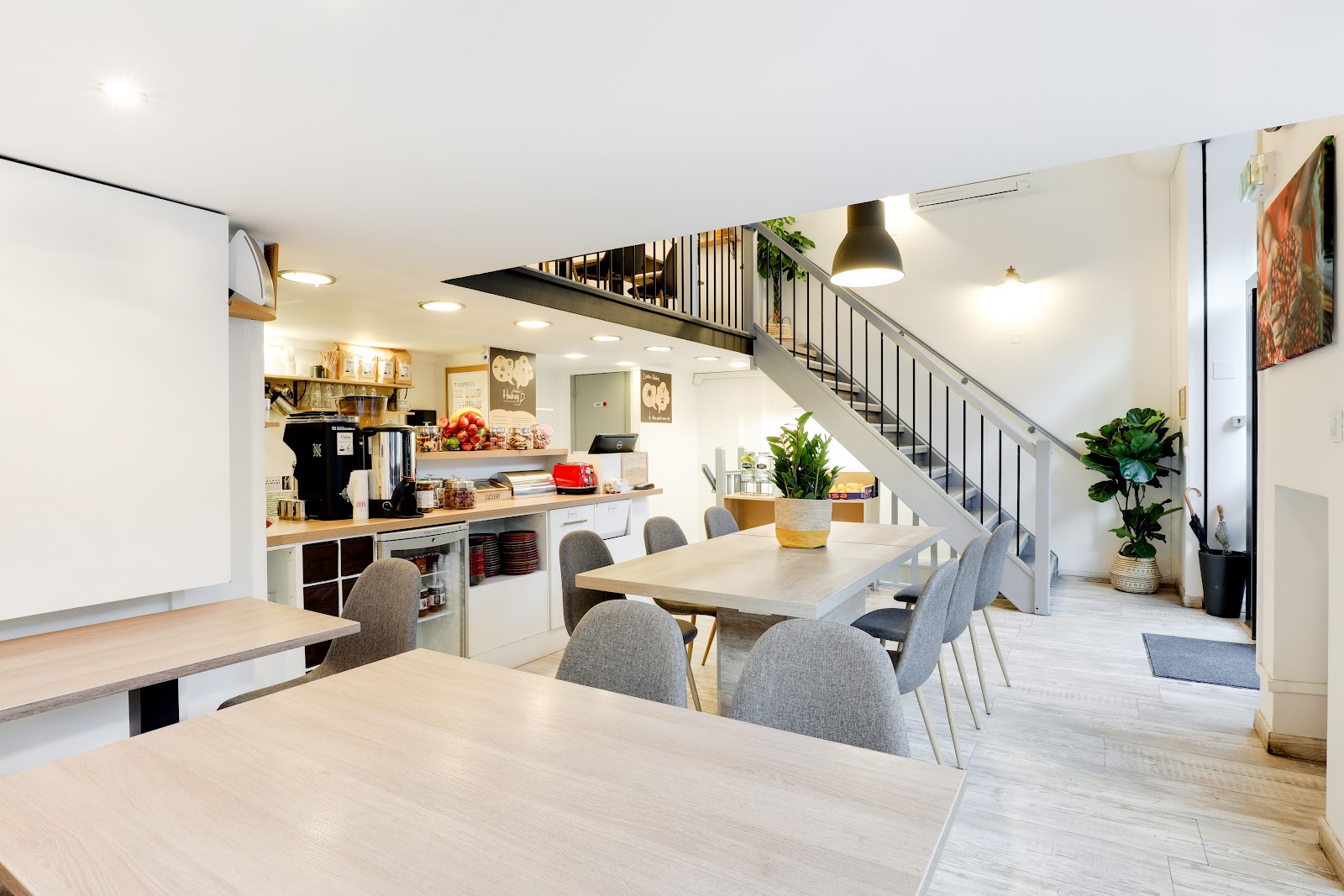
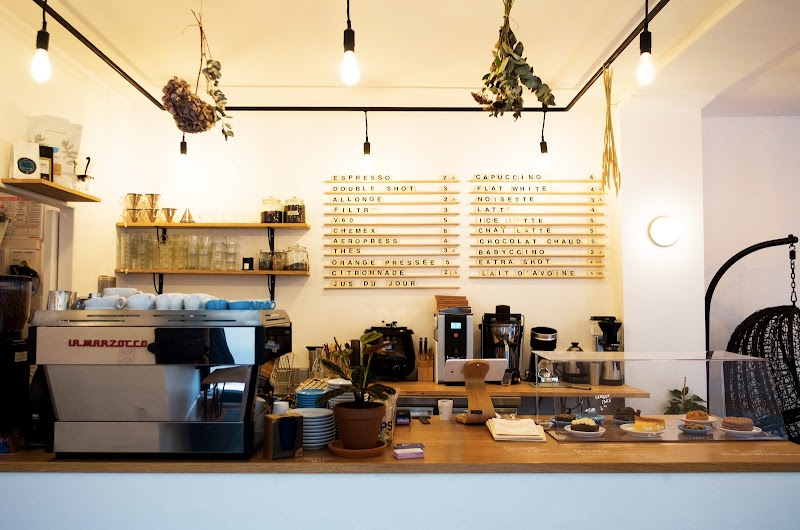
There's a type of café worth taking seriously: the regulars' café. Not the Instagrammable coffee shop where every table is occupied by someone staring at their screen with earphones in. The real neighbourhood café where you come back two, three times a week and the barista starts to know your order.
In these places, something forms without anyone organising it. You recognise the faces. You know the woman at the back comes every Tuesday morning. That the guy by the window is there Thursday afternoons. You don't necessarily talk to each other. But you nod. And that changes everything.
It's a micro-community with no structure, no membership fee, no rules. A form of minimal but real social connection, exactly what remote work erodes over time.
Body doubling: why working surrounded by strangers works
There's a concept from psychology, particularly research on ADHD, that applies perfectly here: body doubling. The principle is simple. Being in the presence of another person who is working (even if what they're doing has nothing to do with your work) improves your concentration and your ability to stay on task.
Your brain regulates differently when it senses a presence around it. The hum of a café, the comings and goings of staff, the background conversations: all of that creates a level of activation that helps many people get to work and stay in it.
It's counterintuitive if you think silence is the condition for working. But it's documented, and thousands of remote workers confirm it from experience: getting your laptop out in a café you like unlocks something.
How to build your informal coworking routine
Informal coworking only really works with regularity. Once, you're just another customer. Three times a week for a month, and you become a regular. And that's where it changes.
A few practical principles to make it work:
Choose just one place to start. Not five cafés in rotation. Just one, close to home or on your natural route. You want this to become a reflex, not a decision.
Set specific time slots. Tuesday mornings, Thursday afternoons, for example. Keeping to regular hours means you run into the same people, and that's what creates a sense of community.
Arrive with a goal. A specific task to accomplish during the session. This stops you spending an hour clicking through browser tabs.
Leave the door open to micro-interactions. A "hello" to the barista, a smile to your table neighbour. These small moments of contact are exactly what you came for.
The value of low-stakes interactions
In a traditional office, social interactions happen naturally: the coffee break, the corridor, a question asked in passing. These are low-stakes interactions, without an agenda, without opening a Zoom call. They seem trivial but they play an essential role in your sense of belonging and wellbeing.
Remote work has eliminated them. And replacing them with video calls, even regular ones, isn't the same. The channel is different, the energy is different.
The barista asking if you want "the usual?", the customer sitting across from you saying "have a good day" as they leave, these are no-stakes interactions, with no performance, no expectation. They feed something that digital tools can't feed. And finding them in a café you visit regularly is simple, free, and far more effective than we tend to think.
Informal coworking doesn't replace everything. If you need meeting rooms, a reliable connection, or a professional address, a proper coworking space will always be more suitable. But if what you're looking for is simply to stop working in a void, start by finding your café. Explore addresses near you on Deskover, and come back often.