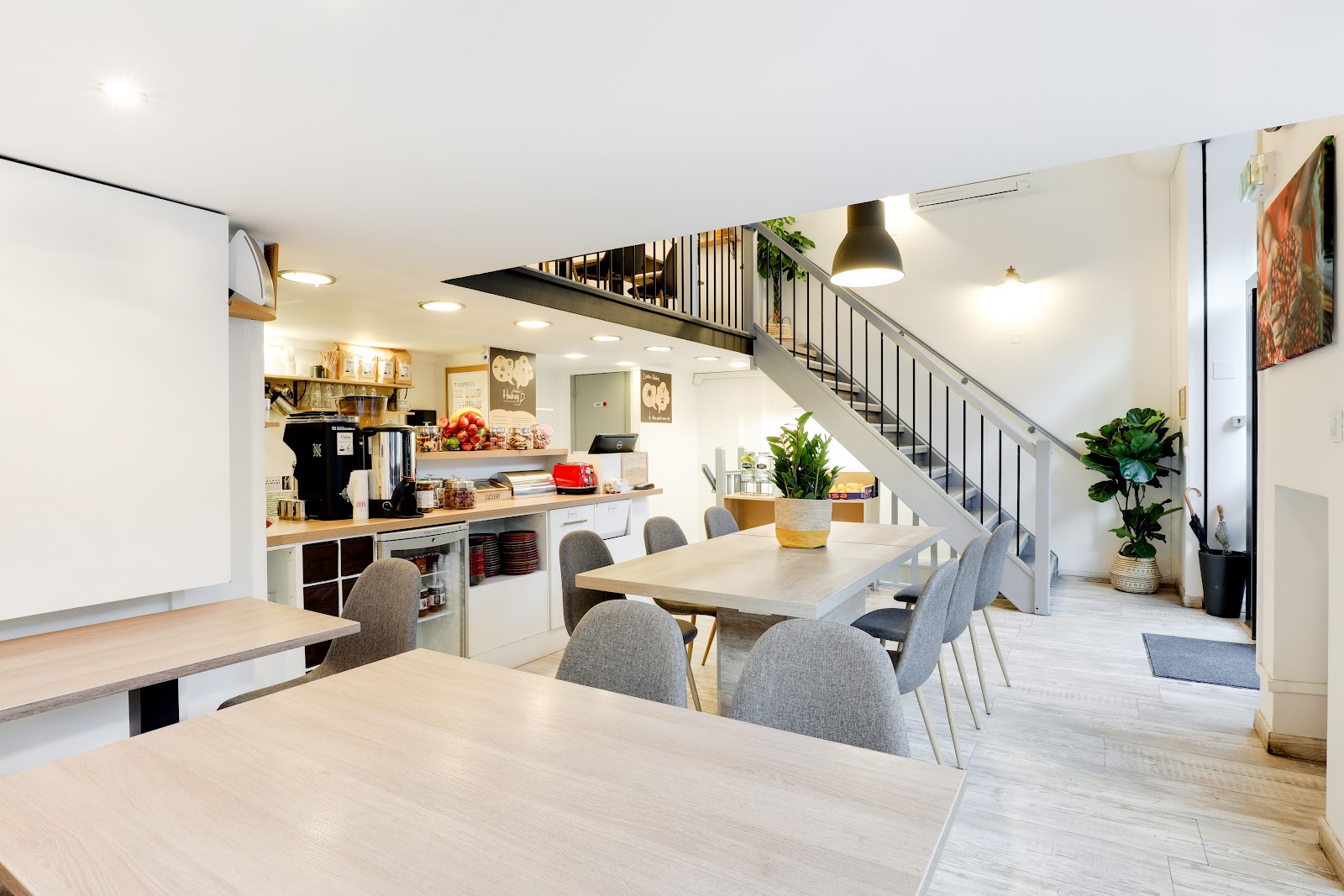
Working from a café is great. The atmosphere, the warm coffee, a bit of movement around you, it makes a change from working at home. But nobody talks about the physical cost. Low chairs, tables that aren't the right height, a screen too close or too far away... Your body quietly absorbs all of it for two hours, and you get home with a stiff neck and burning eyes. Here's what's really going on when you make the café your office.
Posture: the first trap you're ignoring
Cafés aren't designed for working. The chairs look good, sometimes they're low, rarely ergonomic. Tables are often too small or too high. The result: you end up slouched, shoulders rolled in, back rounded, sometimes without even noticing.
The problem with bad posture is that it doesn't hurt straight away. You feel fine for the first hour. Then something starts nagging in your lower back. Then your neck. Then your shoulders. And after two hours, you're stiff.
The solution isn't to avoid cafés, it's to plan ahead. Choose a table with a real chair, not a stool or a too-soft sofa. Keep your feet flat on the floor. Sit up every twenty minutes, set an alarm if you need to. And if you know you're going to work for a long time, check the furniture before you order your coffee.
Screen too low: how you're wrecking your neck
When you put your laptop on a table, the screen ends up well below your eye level. You tilt your head down. It seems harmless, it's actually constant pressure on your cervical vertebrae. Over an hour, it passes. Over three hours, you'll feel it the next morning.
A portable laptop stand changes everything. It's light, fits in a backpack, and puts your screen at eye level in seconds. Pair it with a compact Bluetooth keyboard and mouse, and you've built a proper workstation anywhere.
If you don't have a stand, improvise: put your laptop on your bag, on books, on whatever lets you raise the screen. It's a small thing that makes a real difference over time.
Eye fatigue and blue light
A café is often lit with backlighting, windows behind you or in front. You end up fighting glare on your screen, squinting, cranking the brightness all the way up. All of this tires your eyes faster than in a proper office.
Install a blue light filter on your laptop, most systems have one built in (Night Shift on Mac, Night light on Windows). Turn it on, even during the day. Position yourself so you don't have a window directly in your line of sight or right behind you.
Take visual breaks: every twenty minutes, look into the distance for twenty seconds. It's not a myth, it relaxes the eye muscles. And if you wear glasses, make sure your prescription is up to date.
Hydration: the thing coffee is quietly sabotaging
Coffee is great. Two coffees in the morning, even better. But caffeine is a mild diuretic, it speeds up water elimination. Knocking back espressos without drinking water alongside them sets you up for diffuse fatigue, headaches, and a concentration that dips.
The simple rule: a glass of water for every coffee. Order a carafe of water at the same time as your drink. Some cafés serve it automatically, that's often a good sign about the quality of the place.
And apply the two-to-three-hour rule to your body as much as to your concentration: beyond that, you're no longer really productive, and you're building up physical fatigue. Change location, head home, or find a space with a proper desk.
Working from a café, yes: but with the right habits
The café office isn't a problem in itself. It's a good option for a change of scenery, getting out of the house, working differently. But your body needs you to pay attention. A laptop stand, some water, short and regular breaks, these simple adjustments make all the difference between an enjoyable session and a day where you feel broken when you get home.