You've been working from your sofa for six months, and honestly, it's starting to weigh on you. But the idea of walking into a coworking space for the first time feels a little intimidating. What exactly is it? A disguised open-plan office? Something reserved for hoodie-wearing startups? Not at all. Coworking is simpler, more human, and usually more accessible than you think. Here's what's really waiting for you.
When you push open the door for the first time
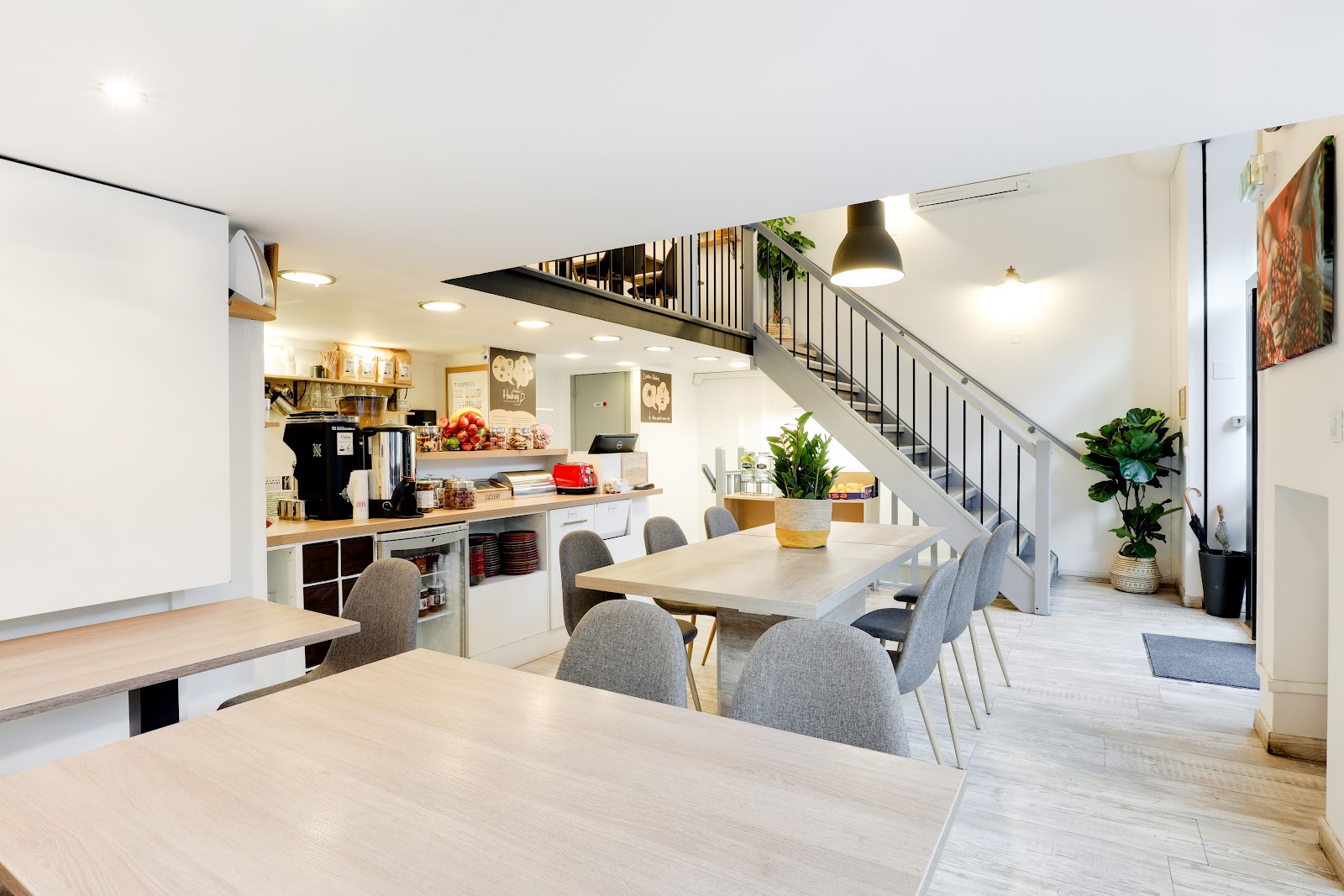
It doesn't look like a corporate office. At reception, someone says hello, gives you a five-minute tour and explains how it works: where the power outlets are, how to connect to the Wi-Fi, where the kitchen is. No dress code, no complicated magnetic pass, no welcome meeting.
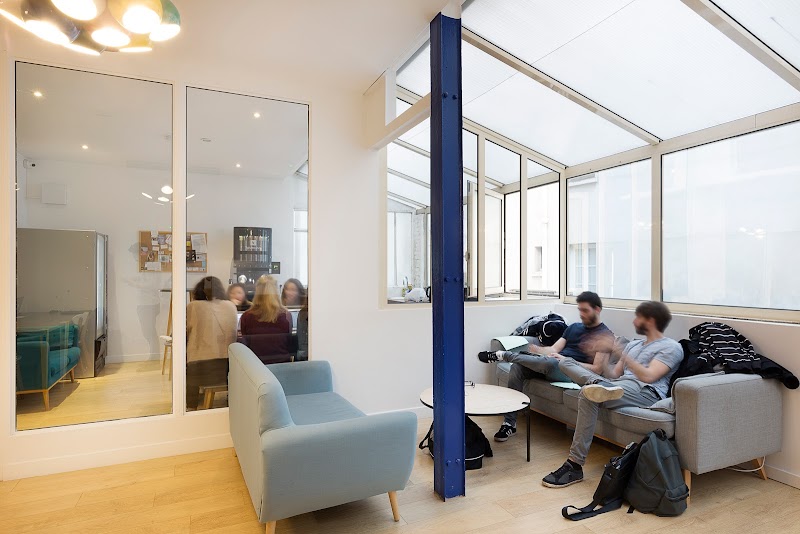
You choose your seat. Some spaces have silent zones, livelier areas, and closed rooms. Nobody dictates anything. You find your footing on the first day, and that's normal. You try a corner near the window, you realise the light is too strong, you move. That's precisely the freedom of coworking: you sit wherever you feel comfortable.
Most of the time, you'll have a locker for your things, access to the kitchen, and a solid Wi-Fi connection, all included in the price of your day.
The unwritten rules to know
Nobody will lecture you, but a few customs establish themselves naturally. The first one: headphones on means "don't disturb me". You figure it out quickly, and you adopt the code yourself soon enough.
Phone calls happen in the phone booth (or "call box"), not in the middle of the open space. Nobody wants to hear your Teams meeting. If the coworking space doesn't have one, you step out into the corridor or go outside.
The kitchen, you leave it as you found it. Your cup, you rinse it. Your leftovers, you throw them away. It's a shared space, not an office where someone cleans up after you.
The noise level varies depending on the zone. In quiet areas, people whisper. Elsewhere, people talk normally. Read the signs, observe for two minutes, and you'll get the vibe.
What's included, what costs extra
The price of your day generally covers: the desk, the Wi-Fi, coffee and sometimes tea. That's the baseline everywhere.
What's often an extra: printing (usually charged per page), meeting rooms (charged by the half-hour or hour), permanent lockers, and drinks beyond basic coffee.
Some coworking spaces offer packages that include a print credit or a few hours of meeting room time per month. If you have regular needs in that area, it's worth checking before committing to a membership.
In Paris, a day runs around 25 to 40 euros. In the rest of France, you'll often find between 10 and 25 euros. For a monthly membership, budget between 150 and 350 euros depending on the city and the services.
Day pass or monthly membership: start by testing
Don't jump straight into a membership. Buy a day first. Several times in different places if needed.
Why? Because every coworking space has its own atmosphere, its own community, its own style. Some are noisy and social, others are calm and focused. Some have beautiful natural light, others feel like a basement with no windows. You can't know until you've spent a day there.
Once you've found the place you come back to happily, then you think about a membership. And at that point it's often worth it, because the monthly rate is much better value than repeated individual days.
The social side: you don't have to network
Coworking is sometimes sold as a place to "build your network". That's a bit of an overstatement. Nobody asks you to do pitches over coffee.
But exchanges happen naturally. At the coffee machine, hunting for the universal charger, asking if the meeting room is free. You cross paths with freelances, remote employees, company founders, creatives. Sometimes you just say hello and dive back into your screen. Sometimes it turns into a real conversation. Sometimes it turns into a collaboration.
Coworking doesn't force you into anything. But it gets you out of the isolation of remote work without throwing you into a corporate open-plan dynamic. That balance is what keeps people coming back.
Your most common concerns, demystified
"It's too expensive." For a day, it's often less than a day spent in cafés with the bills adding up to justify your seat. And you get Wi-Fi, power outlets, clean toilets, and guaranteed quiet.
"It's just an open-plan office." No. Good coworking spaces have varied zones, closed rooms, and different noise levels. You're not forced to work surrounded by noise.
"I won't be able to concentrate." Most people report the opposite. Being in a space dedicated to work, surrounded by people who are working, puts you in work mode. Your sofa doesn't have that effect.
Further reading
- What does a coworking space cost?
- Taking video calls in a coworking space
- Coworking without a subscription
- Café or coworking space?
Ready to try it? On Deskover, we've selected the best coworking spaces in France: the ones with real light, good coffee, and an atmosphere that makes you want to come back. Filter by city, read the details, and book your first day. The rest you'll learn on-site.