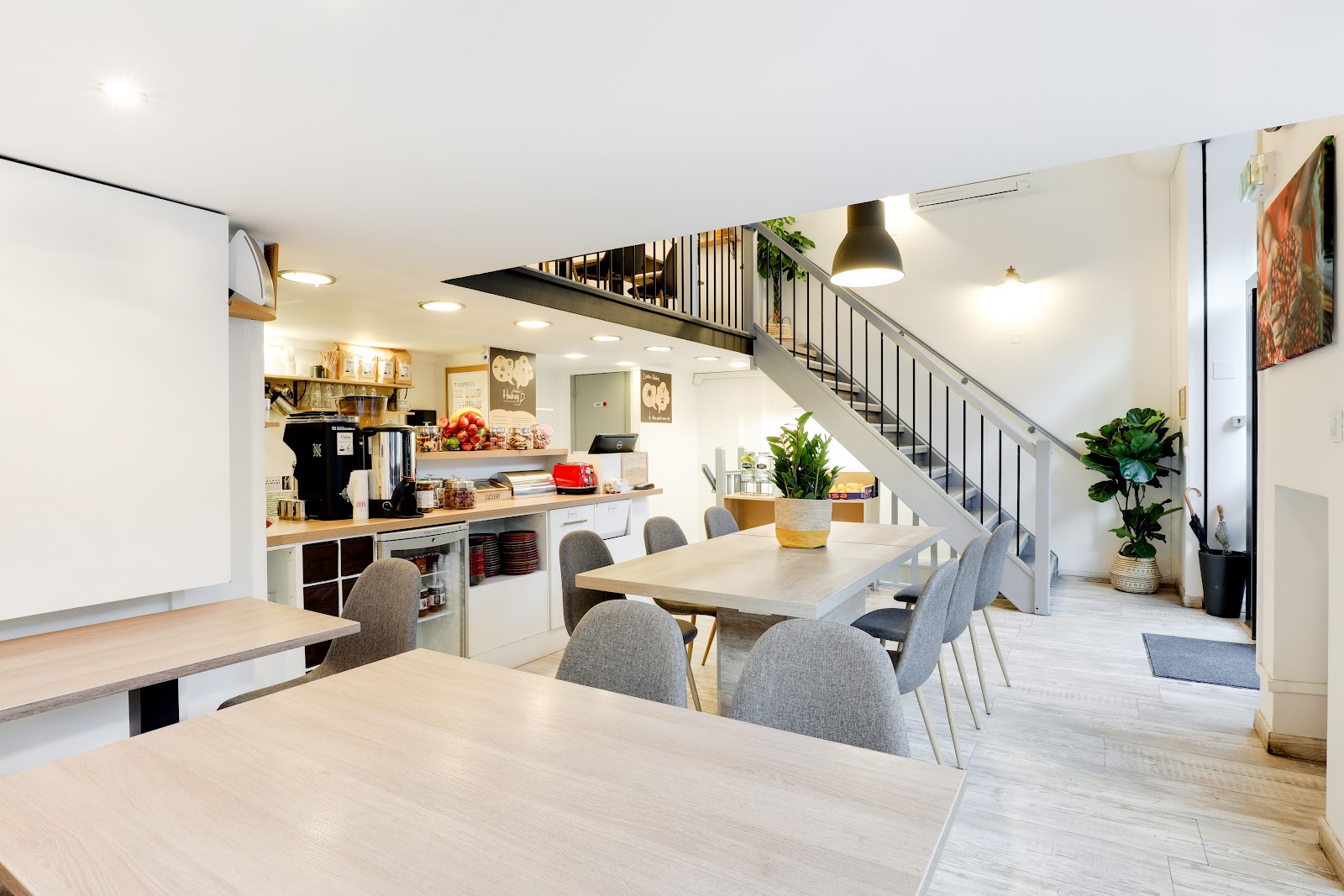
Yes, you can work a whole day in a café. But not just any way, and not just anywhere. There's an implicit contract between you and the owner, and if you respect it, no one will give you a second glance. If you ignore it, you'll be that person with a laptop they'd rather not see come back. Here are the rules of the game.
The implicit contract with the café
You're taking up a table. A table is potential revenue. The deal is simple: you order regularly, you free up space if it's packed, and you don't behave as if you're in a free open-plan office. In practice, that means one order every 1h30 to 2 hours at minimum. A coffee, a pastry, a glass of water with a juice, it doesn't matter, the important thing is to show that you're there as a customer, not a squatter.
How long, concretely?
The comfort zone is 3 to 4 hours. Beyond that, most cafés start to find it long, even if they don't say so. Some places handle it very well, coworking-cafés, big chains like Starbucks, or hybrid community spaces. Others don't. If you sense the server glancing at you strangely after the third hour, you've passed the implicit limit. Read the signals.
How to recognise a laptop-friendly café
It's not all about the "free Wi-Fi" sign. A few signs that don't lie:
- Power outlets visible and accessible without asking
- Well-spaced tables, no deliberately uncomfortable chairs
- Natural light and moderate ambient sound
- Wide opening hours (opens early, closes late)
- Coffees or all-day menus, often a clear signal
Conversely, if the music is blasting, the tables tiny and the server staring at you the moment your coffee is done, the message is clear. On Deskover, we list the spots that genuinely welcome remote workers, not just addresses with Wi-Fi, but places where you can really settle in.
The tip: split your day across two places
Rather than staying 7 hours in the same spot (no one will hold it against you, but everyone will be relieved when you leave), split your day. Morning in one nice café, afternoon in another, or in a coworking space. You change your environment, reset mentally, and avoid the guilt of monopolising a table. Some people do it systematically: neighbourhood café in the morning, coworking space or library in the afternoon. Try it, you'll see.
FAQ
What time should you arrive to get a good table?
Early. Between 8:30am and 9:30am, you have your pick. After 10am in big cities, the good spots are already taken. Arriving at opening is also the best way to settle in without pressure.
Do you need to ask permission to get your laptop out?
No, but if the café is small and full, a glance or a smile when sitting down avoids awkwardness. In 99% of laptop-friendly cafés, no one will stop you.
Should you leave a tip if you stay a long time?
Yes, definitely. If you stay 3–4 hours for two coffees, leave 1 to 2 euros. That's the difference between a server who smiles when you come back and one who sighs when they see you walk in.
What if the café doesn't have Wi-Fi?
It happens. Use your phone as a hotspot and get on with it. Some of the best spots for working don't have Wi-Fi, it filters people out and it's often quieter.
Also read
- How long should you stay in a café?
- Do you need to keep ordering?
- Café or coworking space?
- Screens, posture, fatigue: the pitfalls
Looking for a café where you can really work? Deskover lists the best addresses by city, hand-picked, no fluff.